The King of Thule
Moritz von Schwind · second or third quarter 1800s

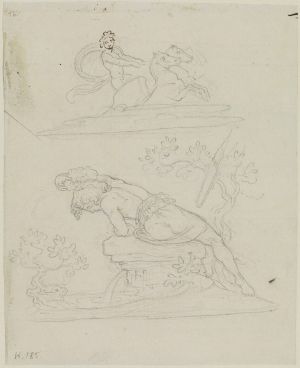
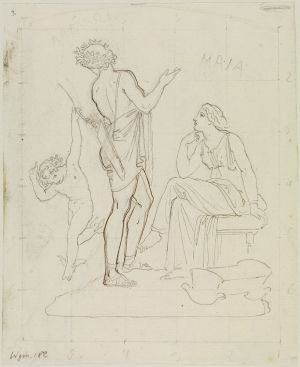
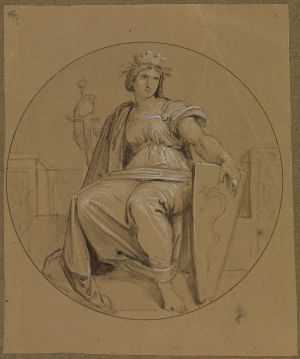
Ever wonder how artists scaled up their sketches for massive murals without ruining the proportions? This drawing by Moritz von Schwind reveals the secret: a grid of squares drawn right over the composition! This technique, called 'squaring up,' allowed artists to copy the image square-by-square onto a larger surface. The scene depicts the melancholic King of Thule, a character from Goethe’s *Faust* who remains faithful to his dead love until the end. You can see the bearded king seated dramatically on a throne, while a smaller narrative scene plays out in a relief carving at the bottom right. It’s a perfect snapshot of German Romanticism, blending medieval folklore with technical precision.
- Date
- second or third quarter 1800s
- Century
- 18C
- Technique
- Pencil or ink drawing with grid overlay
- Material
- Paper
- Culture
- German